🐦

Three Little Birds

Visualizing the Spatial–Temporal "Danger Zone" of Aviation Bird Strikes

Where Birds Meet Planes

An interactive data visualization exploring the intersection of human air travel and natural bird migration — revealing where and when aircraft are most at risk of encountering wildlife.

Explore Visualizations

About the Project

✈️

Safety

Bird strikes pose real economic and safety threats to aviation, causing significant repair costs and operational disruptions every year.

🗺️

Geospatial

By overlaying strike incidents with migratory corridors we identify risk hotspots at specific airports, altitudes, and seasons.

📊

Interactive

Our multi-dimensional visualization lets users explore several aspects of the dataset within a single, cohesive interface.

Datasets

🦅 FAA Wildlife Strike Database

288 810 incidents · 110 columns · FAA data from 1990 – 2023

Covers species, aircraft type, flight phase, location, flight speed and altitude, weather conditions, and economic damage — making it one of the most comprehensive wildlife-strike records available.

View on Kaggle →

🌍 Global Avian Migration Networks

42 844 records · 26 columns · GPS telemetry from 1993 – 2023

Provides directional migration routes with full taxonomic classifications and IUCN conservation status, enabling direct comparison with FAA incident locations.

View on figshare →

Exploratory Data Analysis

Key findings from our preliminary analysis of both datasets. Full notebook available on Google Colab.

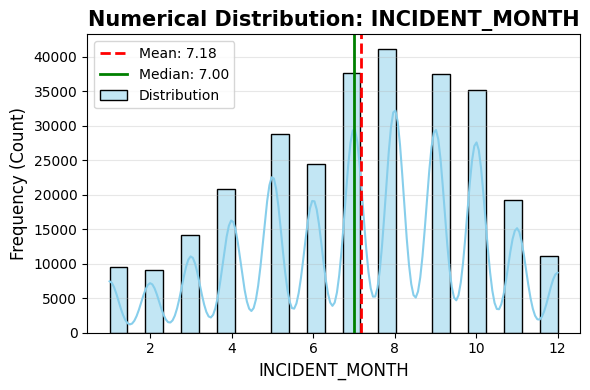
Incidents per Month

Number of bird-strike incidents per calendar month

A clear seasonal peak in summer months — coinciding with the main bird-migration windows.

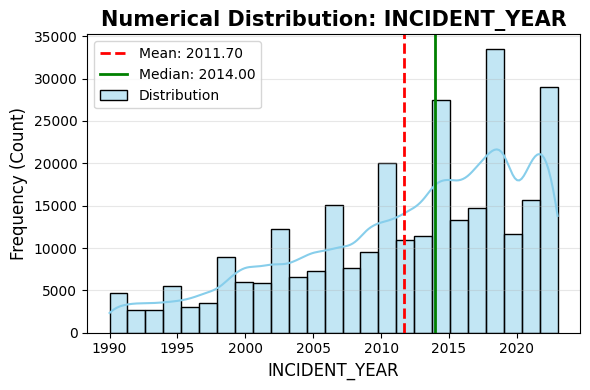
Incidents per Year

Annual trend of bird-strike incidents 1990–2023

A steady upward trend in reported strikes over the 33-year period, reflecting both increased reporting and air traffic growth.

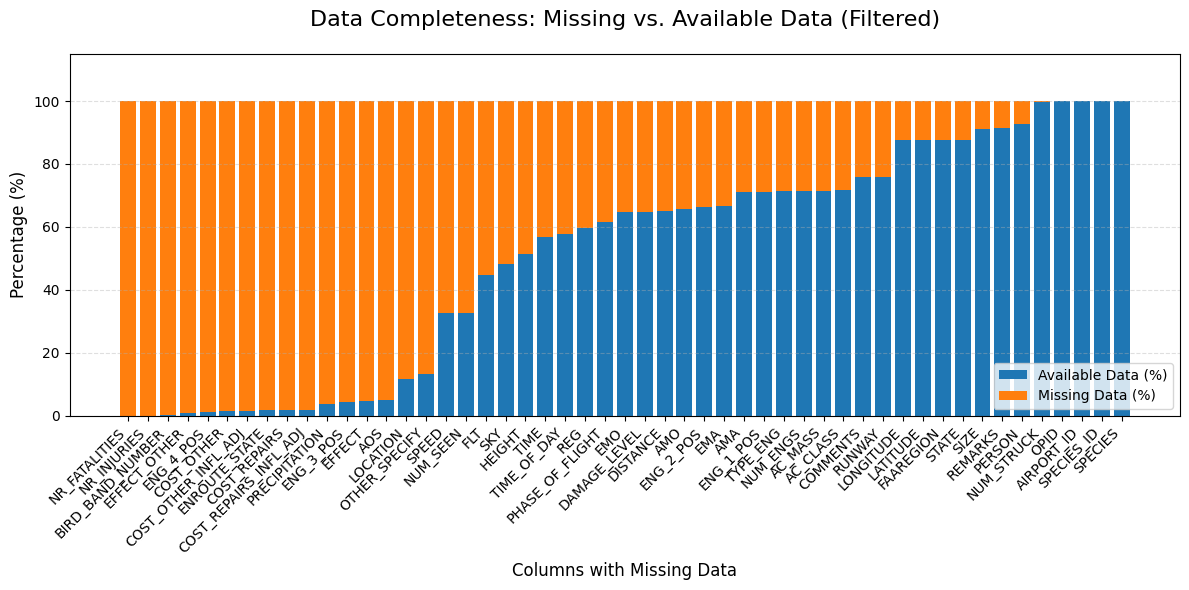
Columns with Missing Data

Overview of columns with missing values in the FAA dataset

Cost and fatality columns are largely empty; weather and coordinate fields have ~10 % gaps requiring targeted imputation.

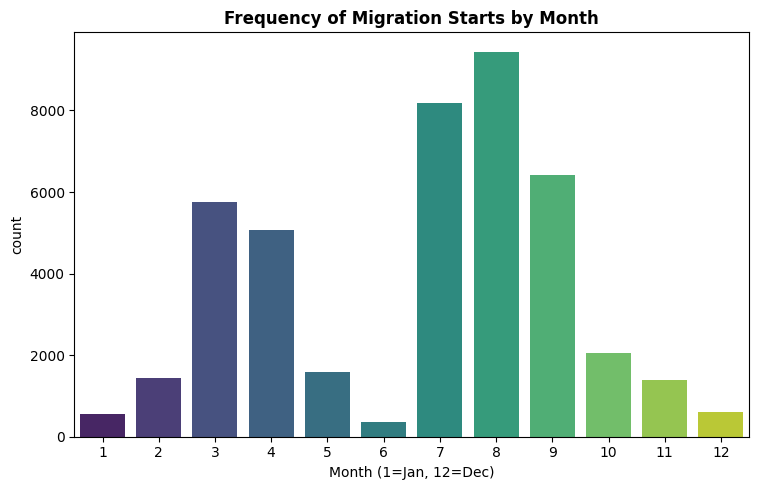
Migration Start Frequency by Month

Frequency of migration starts per month across all species

A bimodal pattern: the primary surge in late summer (July–September) and a secondary spring peak (March–April).

Planned Visualizations

Our final interactive dashboard will combine these three core components into a single, cohesive interface.

🗺️

Strike Hotspot Map

An interactive map overlaying FAA strike locations with global bird migration corridors, highlighting geographic risk zones near airports.

Coming – Milestone 3
📅

Temporal Risk Analysis

Time-series and heatmap views revealing how strike frequency and severity shift across months, years, flight phases, and altitude bands.

Coming – Milestone 3
🛩️

Aircraft Damage Profile

An annotated aircraft schematic showing which components are most frequently struck and under what flight conditions damage occurs.

Coming – Milestone 3

Layout skeleton

We will use this layout skeleton to position our final visualizations, which will be rendered interactively using D3.js. Each placeholder will be replaced with a fully functional plot in the final version.

🗺️ Strike Hotspot Map

🎚️ Interactive Sliders

The sliders do not have an effect on the visual yet.

🛩️ Aircraft Damage Profile

Not yet implemented. Try Airplane instead.

Not yet implemented. Try Airplane instead.

Not yet implemented. Try Airplane instead.

📅 Temporal Risk Analysis

The Team

RJ

Roxan Jaecklin

SCIPER 424398

SW

Samuel Waridel

SCIPER 330169

MF

Martin Fähnrich

SCIPER 423634

Data Visualization (COM-480) · EPFL · 2026